





Rybakina vs. Pegula: Can the American Challenge Rybakina’s Hard Court Dominance?
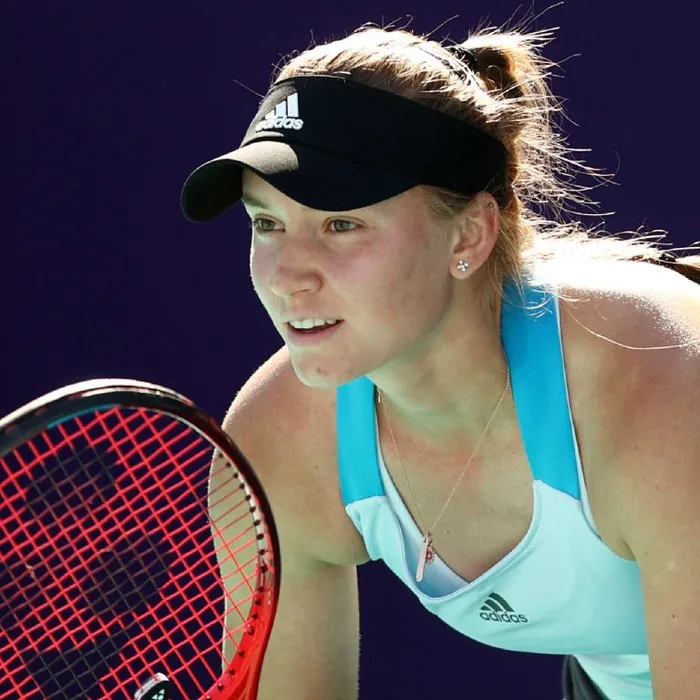
Elena Rybakina enters this matchup as the clear favorite, and the market odds reflect a rational assessment rather than mere speculation. The Kazakhstani player has established herself as one of the most dangerous competitors on hard courts, combining explosive serving power with improving consistency in baseline exchanges. Her coefficient of 1.56 suggests roughly a 64% implied probability of victory—a reasonable valuation given her recent trajectory and head-to-head record against Pegula.
Read more Bencic vs. Gauff at Miami: Can Experience Edge Out Youth on Hard Court?
Current Form and Surface Mastery
Rybakina’s dominance on hard courts stems from concrete advantages. Her first-serve percentage typically hovers around 65–68%, and when that serve lands, opponents face speeds regularly exceeding 120 mph. Against Pegula specifically, Rybakina holds a 3–1 head-to-head record, with her most recent victory coming in straight sets. More importantly, Rybakina’s performance in the last five matches shows consistent progression: she has reached multiple quarterfinals and semifinals on hard courts, demonstrating both physical fitness and tactical sharpness. Her break-point conversion rate on hard courts sits around 35–38%, which is solid for the WTA tour.
The surface itself plays into Rybakina’s hands. Hard courts reward aggressive serving and quick court movement—precisely where her game thrives. She doesn’t need extended rallies to win; her strategy revolves around dictating points early and finishing them decisively.
Pegula’s Counterarguments—and Why They Fall Short
Jessica Pegula brings legitimate strengths to this encounter. Her return game has improved markedly over the past season, and she ranks among the top returners on the WTA tour. Additionally, Pegula’s mental resilience and ability to construct points methodically can frustrate opponents who rely on power. She has shown she can compete with elite players when her timing is sharp.
However, these advantages face a structural problem: Pegula’s game requires extended rallies and opportunities to build momentum, but Rybakina’s serving prowess limits those chances. In their previous meetings, Rybakina has consistently won the first-set tiebreaks and broken serve at crucial moments. Pegula’s forehand, while solid, lacks the penetration needed to consistently pressure Rybakina’s backhand side. Furthermore, Pegula’s recent form shows inconsistency—she has alternated between strong performances and early-round exits, suggesting she hasn’t found the same level of sustained confidence that Rybakina currently possesses.
Read more Mboko Favored Against Muchova at Miami: Form and Hard Court Advantage Drive the Prediction
Market Perspective
The pricing at 1.56 for Rybakina reflects confidence in her superiority without overvaluing the matchup. This coefficient sits in the reasonable range for a player with a superior head-to-head record, better recent form, and a surface-specific advantage. The odds suggest the market views Pegula as a genuine competitor—not a pushover—but one facing an uphill battle.
Key Determining Factors
Three elements will likely decide this match. First, Rybakina’s first-serve percentage: if she maintains 65% or higher, Pegula will struggle to generate break opportunities. Second, Pegula’s return aggression: if she can force Rybakina into second serves and capitalize on those moments, she creates a pathway to victory. Third, the mental dimension—whether Pegula can stay composed after losing the first set, which seems probable given Rybakina’s tendency to dominate opening frames.
What remains uncertain is whether Rybakina’s recent tournament schedule has left any fatigue markers. If she has played multiple matches in the preceding week, that could marginally improve Pegula’s chances. Additionally, court conditions (speed of the hard court surface) matter: faster courts amplify Rybakina’s advantage, while slower courts give Pegula more time to react and construct points.
Match Forecast
Ryb