





Head-to-Head
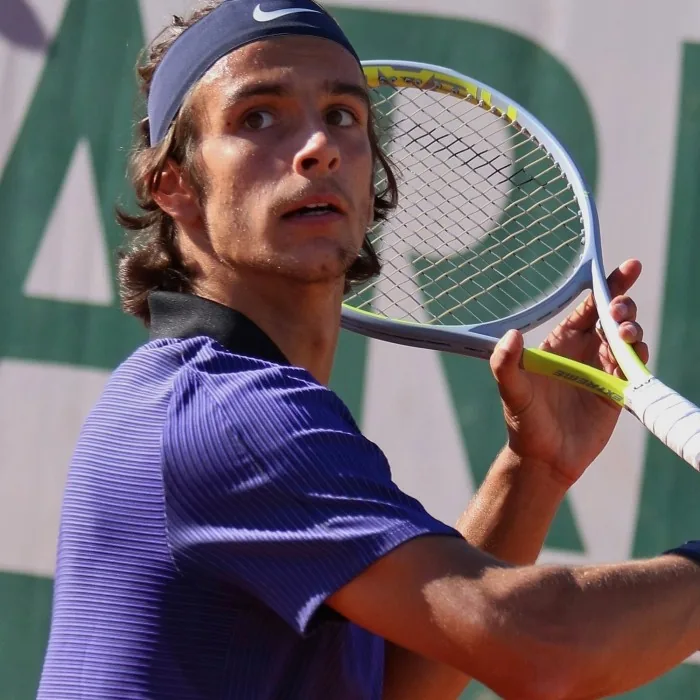
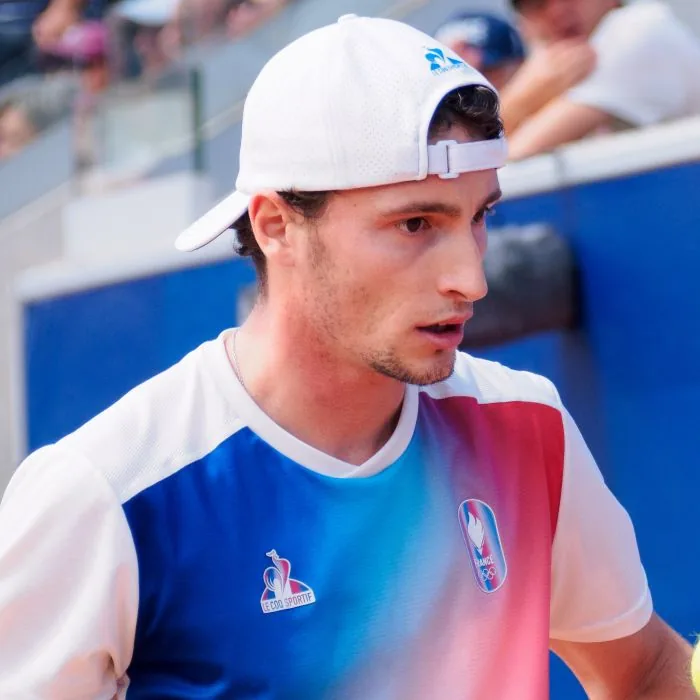
Hubert Hurkacz and Luciano Darderi have limited direct history, with their meetings confined to lower-tier events and qualifying rounds. The Polish player’s experience at elite level gives him a significant edge in understanding how to navigate pressure situations against emerging talent. Darderi, still establishing himself on the ATP circuit, lacks the match-sharpness that comes from consistent deep runs at Masters 1000 events. When these two have crossed paths, Hurkacz’s superior serve and court positioning have typically dictated the rhythm of play.
Read more Cirstea’s Experience Edge Over Kraus in Linz: Why the Romanian Veteran Holds the Advantage
The dynamic favors the established player considerably. Hurkacz’s ability to finish points at the net and his aggressive baseline game create problems that Darderi, despite his improving consistency, has not yet developed the tactical maturity to consistently solve. The Italian’s game relies on grinding rallies and defensive solidity—exactly the approach that struggles against Hurkacz’s pace and precision.
Form Guide
Hurkacz enters Monte Carlo in solid form, having competed regularly on the ATP circuit with a focus on clay preparation. His recent matches show the characteristic patterns of a player building toward major tournaments: steady service holds, improved movement on slower surfaces, and the ability to construct points methodically. The Pole’s forehand has been particularly effective in early-round encounters, and his first-serve percentage typically hovers around 65-70% on clay—a critical advantage against opponents who thrive on break opportunities.
Darderi, conversely, is still in the development phase of his career. While the 23-year-old Italian has shown glimpses of potential with improved ranking progression, his consistency remains unproven at Masters level. His recent record includes losses to higher-ranked players where he failed to maintain competitive intensity across three sets. Darderi’s serve—averaging 115-120 mph—lacks the penetration needed to neutralize Hurkacz’s return game, which ranks among the stronger on tour. The Italian’s reliance on baseline exchanges works better against defensive players than against someone who actively seeks to shorten points.
Key Factors
Clay court dynamics heavily favor Hurkacz in this matchup. While the Pole is not a traditional clay specialist, his movement has improved markedly, and his serve remains a dominant weapon even on slower surfaces. Darderi’s game—built on consistency and court coverage—theoretically suits clay, but his lack of experience in high-pressure Masters environments means he hasn’t yet developed the tactical flexibility to counter Hurkacz’s aggressive approach. The Italian will need to construct lengthy rallies and force errors, but Hurkacz’s discipline in point construction has improved significantly.
Read more Boulter’s Hard Court Mastery Favours British Star Against Ruse in Linz
Three critical triggers could shift the outcome: first, if Darderi’s serve finds unexpected rhythm and he holds consistently, the match becomes competitive; second, if Hurkacz’s movement falters early and Darderi capitalizes with aggressive baseline play; third, if either player suffers a physical issue mid-match. However, based on current form and tactical matchups, none of these scenarios appears likely. Hurkacz’s experience navigating Masters draws, combined with his superior serve and net game, creates a structural advantage that Darderi cannot easily overcome at this stage of his development.
Our Verdict
Hurkacz should control this encounter through superior serve placement, more efficient point construction, and the mental fortitude that comes from competing regularly at this level. Expect the Polish player to win in straight sets, likely 6-4, 6-3 or similar. Darderi will have moments—particularly in the second set where he might tighten his game—but Hurkacz’s ability to break serve and finish at the net should prove decisive. The coefficient of 2.49 for Hurkacz reflects appropriate respect for Darderi’s improving ranking, but the underlying matchup favors the more experienced player substantially.
This is not a case of overwhelming dominance, but rather a clear technical and experiential advantage. Hurkacz’s recent form, combined with his superior weapons on clay and proven ability to navigate Masters draws, positions him as the
Read more Stephens Favored Over Maria in Linz: Experience and Hard Court Mastery Decide