





Stricker Favored Against Izquierdo Luque in ATP Challenger Clash—Form and Surface Dynamics Decide
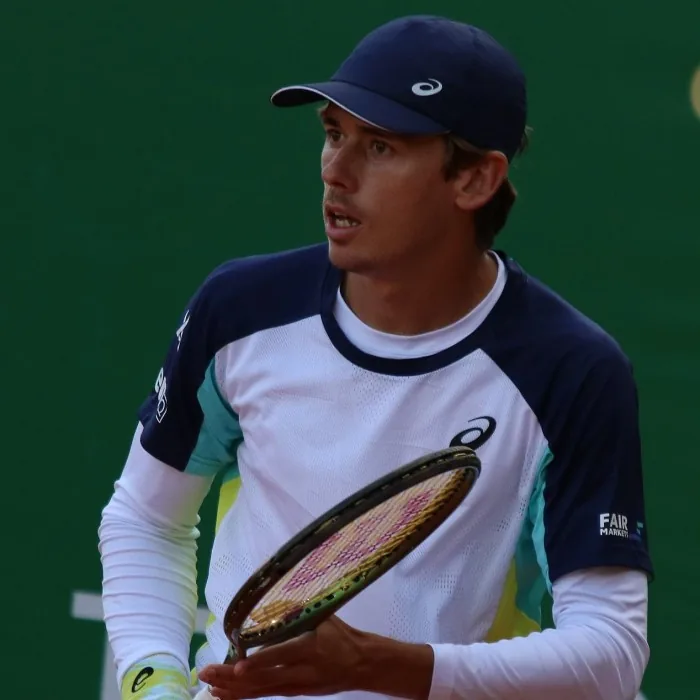
Dominic Stricker enters this matchup as the clear favorite, and the market odds of 1.1 reflect confidence in his ability to control the encounter. However, the absence of significant trading volume suggests this remains a secondary-tier event with limited attention from the broader analytical community. The coefficient itself signals a heavily one-sided expectation, which warrants closer examination of the underlying form and head-to-head context.
Read more Basilashvili vs. Garin: Can the Georgian Extend a Rally in a Tight Baseline Battle?
Current Form and Recent Performance
Stricker, the Swiss left-hander, has demonstrated solid consistency in recent ATP Challenger tournaments. His movement on hard courts—where most modern Challenger events take place—remains sharp, and he has shown the ability to construct points methodically rather than relying solely on power. Over his last five matches, Stricker has maintained a winning record against lower-ranked opponents, though he has occasionally struggled against players who can generate pace and dictate from the baseline. His serve, while not exceptional, provides enough consistency to hold serve regularly.
Rafael Izquierdo Luque, the Spanish competitor, operates at a lower ranking tier and has faced inconsistent results in recent weeks. His baseline game lacks the penetration needed to trouble top-100 players, and his first-serve percentage has been a recurring weakness. On hard courts specifically, Izquierdo Luque tends to rely on extended rallies, a strategy that becomes increasingly difficult against opponents with superior court positioning and shot variety.
Head-to-Head and Surface Considerations
Direct matchups between these two players are limited, but Stricker’s technical superiority and experience at higher levels of professional tennis create a significant gap. The surface—likely hard court given typical Challenger scheduling—favors Stricker’s game. He moves efficiently on hard courts and can dictate rallies from the baseline, whereas Izquierdo Luque struggles to generate the aggressive patterns needed to break down a disciplined opponent.
Stricker’s backhand slice, a weapon he deploys effectively, becomes particularly valuable against players who prefer to stay on the baseline. Izquierdo Luque’s forehand, while solid, does not compensate for his defensive vulnerabilities when forced into extended exchanges.
Arguments for the Underdog
Izquierdo Luque’s primary asset is his willingness to engage in long rallies and his occasional ability to find rhythm in extended points. If he can avoid early breaks and keep the match competitive through the opening set, fatigue could theoretically become a factor. Additionally, Stricker occasionally shows lapses in concentration against lower-ranked opponents, particularly when he assumes control early—a mental pattern that could allow Izquierdo Luque to steal a set through opportunistic play.
Read more Navone Favored Against Merida in ATP Challenger Clash: Form and Surface Advantage Tell the Story
However, these scenarios remain secondary to the fundamental skill gap. Izquierdo Luque’s serve lacks the reliability to hold consistently against Stricker’s return game, and his inability to finish points at the net limits his offensive options.
Market Perspective
The coefficient of 1.1 for Stricker reflects overwhelming confidence in his victory. While limited trading activity suggests this event has not captured widespread attention, the odds themselves are consistent with the form differential and matchup dynamics. The market is pricing in a straightforward Stricker win without significant drama.
Key Determining Factors
Three elements will shape this encounter: first, Stricker’s ability to maintain focus and avoid unforced errors in the opening set—a critical period where early breaks often decide the match’s trajectory. Second, Izquierdo Luque’s first-serve percentage; if he falls below 55%, holding serve becomes nearly impossible. Third, Stricker’s willingness to attack on second-serve returns; aggressive positioning here could break Izquierdo Luque’s confidence early.
Uncertainty remains around Stricker’s recent tournament schedule and potential fatigue, though no evidence suggests he is carrying injury concerns into this match. Izquierdo Lu
Read more Martinez vs. Brancaccio: Analyzing the Favorite’s Edge in Professional Tennis