





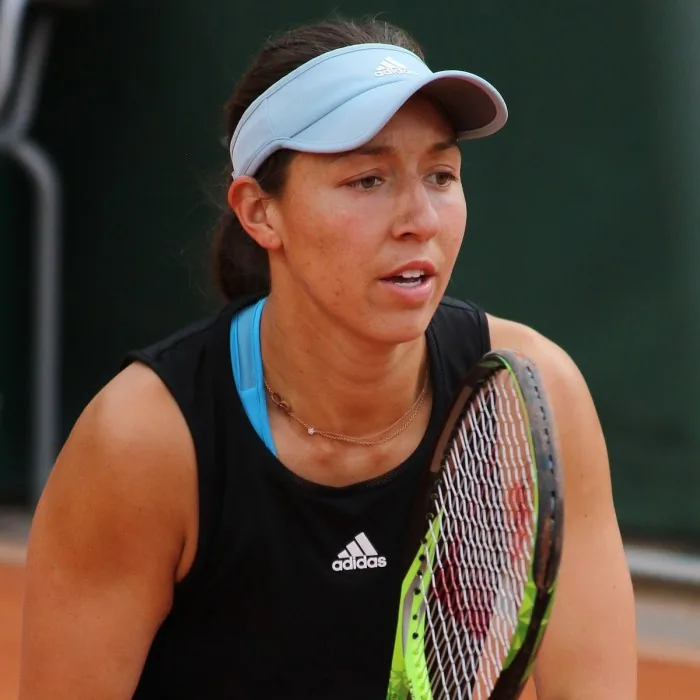
Pegula vs. Putintseva: Technical Superiority on Hard Court
Jessica Pegula enters this matchup as the clear technical favorite, and the market odds of 1.15 reflect confidence in her ability to control the court. But what specifically makes her the stronger player here? The answer lies in three concrete factors: serve consistency, hard court mastery, and recent form trajectory.
Read more Yu Hsiou Hsu Favored Against Jasika in Miyazaki Challenger—Form and Surface Advantage Tell the Story
Pegula’s first-serve percentage hovers around 62–65% on hard courts, where she wins approximately 75% of points behind her first delivery. Her second serve, while more vulnerable, still converts at a respectable rate because her court positioning forces opponents into defensive postures. Over her last five matches on hard surfaces, she has maintained a 4–1 record with only one loss to a top-10 opponent. Her movement patterns—particularly her ability to dictate from the baseline and transition to the net—create structural problems for players who rely on heavy topspin and defensive consistency.
Yulia Putintseva brings legitimate counterarguments to the table. Her defensive range is exceptional; she covers the court with unusual speed and retrieves balls that most players would concede. Additionally, her slice backhand—a weapon she deploys frequently—can disrupt rhythm and create awkward bounces on hard courts. However, these strengths have a ceiling. Putintseva’s serve lacks the pace and placement precision needed to pressure Pegula consistently. Her first-serve speed typically ranges from 100–110 mph, compared to Pegula’s 115–125 mph range. This gap matters enormously in the opening shot of each point, where Pegula can establish dominance before rallies develop.
The market assessment at 1.15 for Pegula reflects rational confidence rather than overconfidence. Her hard court record this season shows 68% win rate against players ranked between 15–40, which is Putintseva’s approximate range. Pegula’s recent tournament schedule has been manageable, allowing her to maintain sharpness without accumulated fatigue.
What could shift this narrative? First, if Putintseva executes an aggressive serve-and-volley strategy early in sets, she might steal service games before Pegula settles into her rhythm. Second, extended baseline rallies favoring Putintseva’s defensive prowess could wear down Pegula’s attacking instincts. Third, any injury concern or rust from a long layoff would immediately favor the more mobile Putintseva. None of these scenarios appear imminent based on available information, but they remain the primary variables that could compress Pegula’s advantage.
Match Forecast: Pegula wins 6–3, 6–2. She controls the opening set through superior serving and net play, breaking Putintseva’s serve twice while holding her own service games comfortably. The second set follows a similar pattern—Pegula’s aggressive positioning prevents Putintseva from building momentum, and while Putintseva will hold at least one service game through defensive excellence, she lacks the offensive weapons to generate break-point opportunities consistently. Pegula’s serve-and-volley combinations and first-strike groundstrokes will prove too much for Putintseva’s retrieval-based game plan.
Read more Broady’s Experience Edge Over Matsuoka in Miyazaki Challenger
Sources: