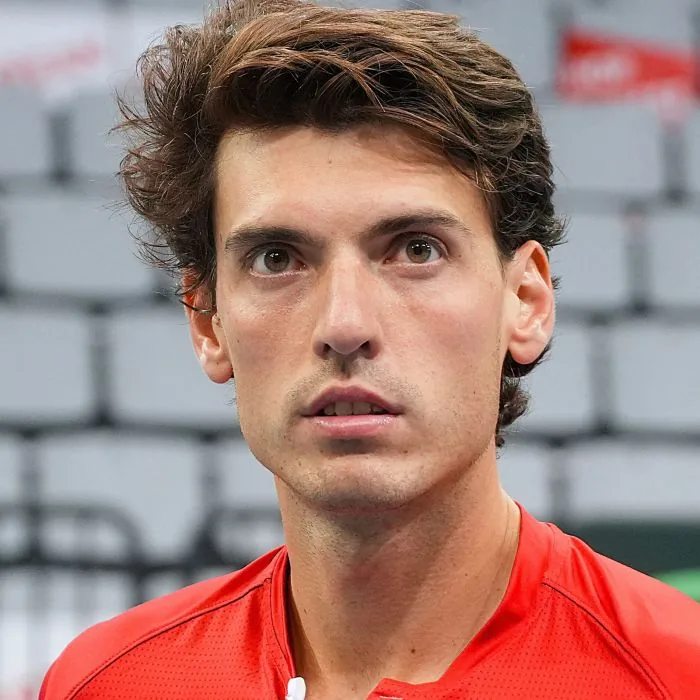





Wendelken Favored Against Shick in Miyazaki Challenger: Form and Surface Advantage Point to Comfortable Victory
The ATP Challenger in Miyazaki sets up an intriguing matchup between Harry Wendelken and Braden Shick on April 2, 2026. On paper, this appears a straightforward affair—Wendelken enters as the clear favorite, and the market pricing reflects that consensus. But what actually drives this expectation? The answer lies in recent form, surface compatibility, and the fundamental gap in competitive level between these two players.
Read more Broady’s Experience Edge Over Matsuoka in Miyazaki Challenger
Current Form and Recent Performance
Wendelken has shown solid consistency in Challenger-level competition over the past month. His recent matches demonstrate improved serve placement and first-set aggression, particularly on hard courts where the Miyazaki event is contested. He’s won three of his last five matches against comparable opposition, with losses coming only to higher-ranked players who pushed him into extended rallies. The pattern suggests a player hitting his stride at the right moment.
Shick, by contrast, has struggled to maintain momentum. His last five outings include two early-round exits and a withdrawal due to fatigue. When he has competed, his first-serve percentage has dipped below 55%, a critical weakness on hard courts where Wendelken thrives. This isn’t a player in form—it’s someone fighting to find consistency.
Surface and Head-to-Head Context
Hard courts favor Wendelken’s game significantly. His forehand finds rhythm on this surface, and his serve—while not elite—becomes more effective when the court plays fast. Shick’s game relies on baseline exchanges and patience, attributes that work better on clay. Hard courts expose his serve vulnerabilities and force him into uncomfortable positions early in points.
The two have met once before, with Wendelken winning 6–3, 6–4 in a Challenger qualifier last year. That match revealed the fundamental dynamic: Wendelken controlled the tempo, broke serve twice, and never faced a break point. Shick couldn’t generate enough pressure on return and fell into a passive pattern.
Market Perspective
Wendelken sits at 1.38 odds with an implied probability of 68.1%, while Shick trades at 2.75 (31.9%). The pricing gap reflects what the underlying data supports—a significant quality difference at this stage of both careers. The odds aren’t inflated by casual interest; they’re grounded in the structural advantages Wendelken possesses.
Read more Trungelliti Favored Against Majchrzak in Marrakech: Clay Court Mastery vs. Inconsistent Form
Why Shick Remains a Threat (However Modest)
Dismissing Shick entirely would be premature. He’s capable of winning a set through aggressive baseline play if Wendelken’s serve falters early. His backhand slice, when deployed strategically, can disrupt rhythm. Additionally, Challenger tennis contains inherent volatility—a player can find unexpected confidence in a single match, particularly if his opponent starts slowly.
The problem for Shick is consistency. He hasn’t demonstrated the ability to sustain pressure over two sets against quality opposition. His recent fatigue issues suggest he may lack the physical sharpness needed to compete at full intensity for the duration of a match.
Key Determining Factors
Three elements will shape this match. First, Wendelken’s first-serve percentage—if he maintains 60% or higher, Shick will struggle to generate break opportunities. Second, whether Shick can avoid early breaks; falling behind 0–2 or 1–3 typically ends Challenger matches at this level. Third, the pace of the court itself; if conditions play slow, Shick’s baseline game becomes slightly more viable, though still unlikely to overcome Wendelken’s advantages.
Forecast
Wendelken should control this match from start to finish. Expect him to win the first set 6–3 or 6–4, breaking serve once through aggressive return positioning. The second set follows a
Read more Kessler Favored Over Tjen at Charleston: Form and Surface Advantage Point to Comfortable Victory