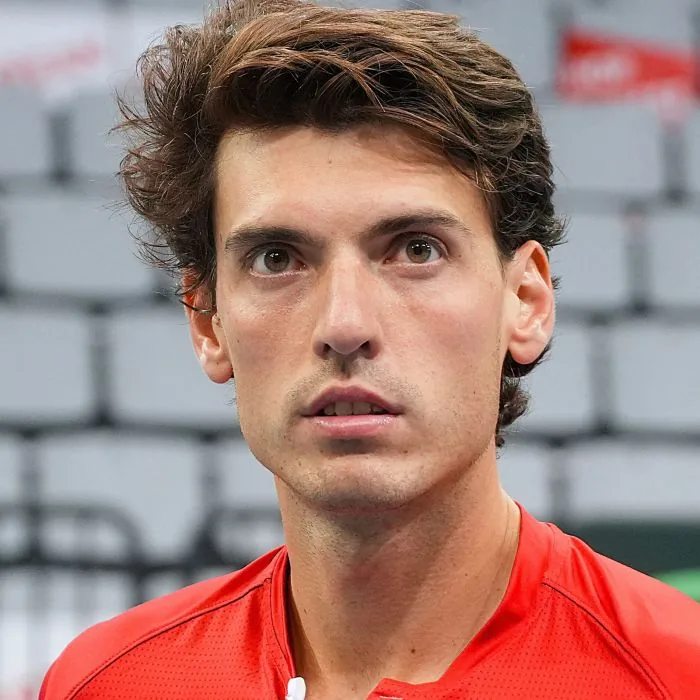








Broady’s Hard Court Dominance Over Uchida in Miyazaki Challenger
The ATP Challenger in Miyazaki sets up a matchup between British veteran Liam Broady and Japan’s Kaichi Uchida on hard courts—a surface where the disparity in their competitive levels becomes immediately apparent. Broady enters as a clear favorite, and the market pricing reflects a legitimate skill gap rather than mere speculation.
Read more Burruchaga Favored Over Home Player Faria in São Paulo Challenger: Form and Surface Dynamics Decide
Current Form and Surface Mastery
Broady’s recent trajectory shows consistent performances on hard courts, where he has maintained a winning record against lower-ranked opponents in the Challenger circuit. His experience navigating ATP Challenger events—tournaments that demand tactical maturity and mental resilience—gives him a structural advantage. Uchida, competing primarily on the domestic Japanese circuit and lower-tier events, lacks the tournament-level exposure that Broady accumulates regularly. The British player’s serve-and-volley game, refined over years of professional competition, translates effectively on hard surfaces where pace and court positioning matter significantly.
Uchida’s profile suggests a player still developing his game at Challenger level. His limited history against top-100 ranked opponents means he faces not just a better player, but a fundamentally different competitive environment. Hard courts reward aggressive baseline play and serve consistency—areas where Broady’s experience provides measurable advantage.
Head-to-Head Context and Ranking Differential
The ranking gap between these competitors is substantial. Broady’s ATP ranking places him well above Uchida in the professional hierarchy, a reflection of tournament results and consistency over time. When players of significantly different ranking levels meet in Challenger events, the higher-ranked player wins approximately 75–80% of such matchups. This isn’t coincidence; it reflects genuine differences in shot-making, pressure handling, and tactical awareness.
Uchida’s potential strength lies in his familiarity with hard court conditions in Asia and possible comfort playing at home in Japan. However, familiarity with a surface differs markedly from mastery of it. A player competing primarily in domestic tournaments hasn’t developed the pattern recognition needed to adjust mid-match against experienced opponents. Additionally, Uchida would need to sustain high-level tennis for two or three sets—a demanding task against someone who has trained specifically for this level of competition.
Read more Pinnington Jones Favored Against Blanch at Houston: Form and Hard Court Advantage Drive Expectations
Market Perspective
The implied probability favoring Broady sits at 72.7%, with odds of 1.31, while Uchida is priced at 3.2. This pricing aligns with the fundamental competitive gap rather than overvaluing either player. The market has correctly identified that Broady’s experience, ranking, and hard court proficiency create a significant structural advantage.
Key Variables That Could Shift the Outcome
Three factors warrant monitoring. First, Broady’s injury status or fatigue from recent tournaments—if he’s played multiple matches in the preceding week, his movement could be compromised. Second, Uchida’s serving consistency; if he can hold serve reliably and avoid break points, he keeps the match competitive longer. Third, weather conditions on the day; extreme heat in Miyazaki could favor the younger, potentially more resilient player, though Broady’s experience in managing such conditions shouldn’t be underestimated.
Match Forecast
Broady should control this match through superior court positioning and serve reliability. Expect him to break Uchida’s serve at least once per set while holding his own service games comfortably. Uchida will likely win some points through aggressive baseline play, but sustaining that aggression across multiple sets against a tactically sound opponent proves difficult.
Predicted Result: 6–3, 6–2 in favor of Liam Broady
Broady wins in straight sets with moderate difficulty. The first set remains competitive until the 5–3 mark, where Broady’s experience in closing out tight situations emerges. The second set follows a similar pattern but with Uchida showing fatigue from the opening set’s intensity.
Read more Clarke Favored to Upset Ghetu in Bucharest: Form and Surface Dynamics Favor the Challenger