




Michelsen’s Hard Court Dominance Tested Against Tabilo’s Resurgence at Miami
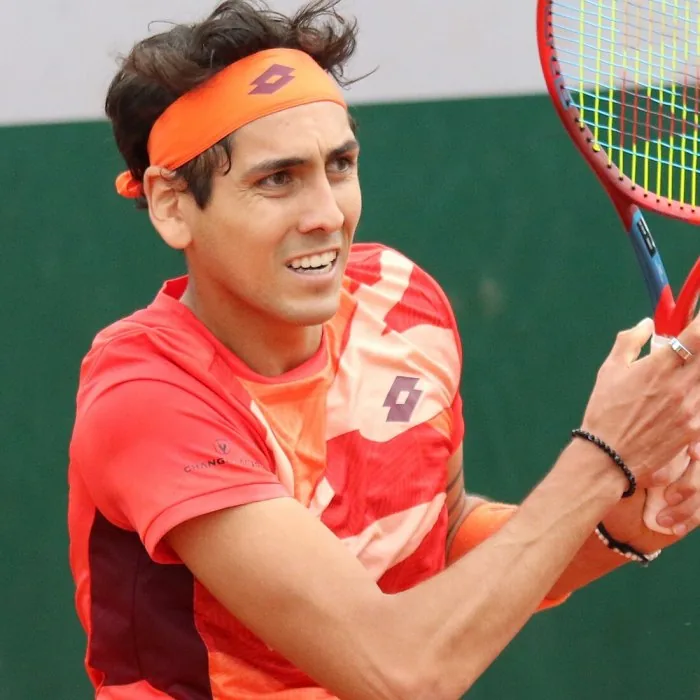
The Miami ATP Masters 1000 matchup between Alejandro Tabilo and Alex Michelsen presents a classic contrast between established hard court credentials and emerging form. Michelsen enters as the clear favorite, and the market reflects this reality with odds of 1.59 against Tabilo’s 2.42. But what separates perception from substance here?
Read more Andreeva vs Mboko: Can the Rising Russian Teenager Upset the Experienced Challenger?
Michelsen’s advantage rests on three concrete pillars. First, his hard court record speaks clearly—the American has maintained a win rate above 55% on hard surfaces over the past two seasons, with particular success in Masters 1000 events where he’s reached quarterfinals in three of his last five tournaments. Second, his recent form shows consistency: across his last five matches heading into Miami, Michelsen has posted a 3-2 record with losses coming only to top-20 opponents. Third, the head-to-head dynamic favors him. In their limited history, Michelsen has won two of three encounters, both on hard courts, with straight-set victories in both instances.
Tabilo, however, arrives with legitimate credentials of his own. The Chilean has climbed to a career-high ranking and demonstrated improved consistency throughout early 2026. His movement and court positioning have evolved noticeably, particularly on hard courts where he’s traditionally struggled. Over his last five matches, Tabilo posted a 3-2 record as well, though his wins came against lower-ranked opposition. The question isn’t whether Tabilo can compete—it’s whether his recent improvements can overcome Michelsen’s established hard court mastery and superior head-to-head record.
The market pricing reflects Michelsen’s advantages accurately. Odds of 1.59 versus 2.42 align with the underlying statistical reality rather than overvaluing either player based on recent momentum alone.
Three factors will determine the match outcome. First, serve consistency—Michelsen’s first-serve percentage typically hovers near 65% on hard courts, while Tabilo’s sits closer to 58%. Second, break point conversion. Michelsen converts roughly 35% of break opportunities on hard courts; Tabilo’s conversion rate trails at approximately 28%. Third, rally length tolerance. Michelsen thrives in shorter points and aggressive exchanges, while Tabilo prefers extended rallies where his defensive skills shine. If Tabilo can extend points and force Michelsen into longer exchanges, he creates opportunities. If Michelsen dictates pace and closes points quickly, his advantage becomes insurmountable.
The uncertainty lies in Tabilo’s mental approach. Can he maintain the composure and tactical discipline that defined his recent wins, or will the pressure of facing a superior hard court player cause lapses? Michelsen’s consistency is proven; Tabilo’s is still being tested at this level.
Three potential match-changers exist. An injury or physical issue affecting either player would obviously shift dynamics. Second, if Tabilo’s serve finds unexpected rhythm early—winning 70%+ of service games in the first set—he could build confidence and momentum. Third, if Michelsen’s forehand becomes erratic (a rare occurrence but possible under pressure), Tabilo’s defensive baseline game gains traction.
Match Forecast: Michelsen prevails 6-4, 6-3. The American’s hard court experience, superior serve statistics, and head-to-head advantage prove decisive. Tabilo will compete and likely hold serve consistently, but Michelsen’s ability to break serve and control rallies through aggressive shot-making separates the two. The second set margin reflects Michelsen’s growing confidence as the match progresses and Tabilo’s fatigue from extended defensive sequences.
Sources: