





Vekic’s Clay Dominance Over Vickery: A Charleston Mismatch on Paper
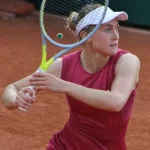
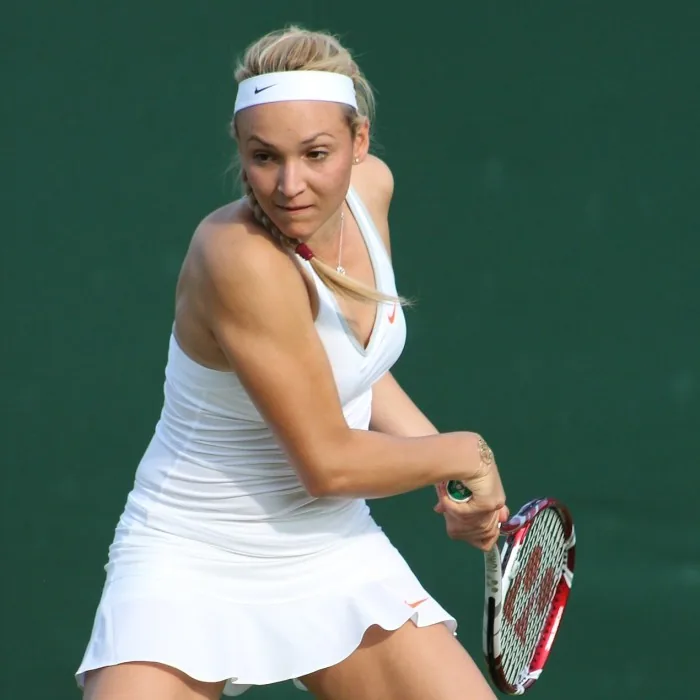
The Charleston clay courts will host a significant disparity in experience and surface mastery when Donna Vekic faces Sachia Vickery on March 28, 2026. The market consensus reflects this gap decisively—Vekic sits at 90.4% implied probability, while Vickery commands just 9.6%. But beyond the numbers, the underlying tennis fundamentals explain why this projection aligns with reality.
Read more Heliovaara and Patten Favored Against Bolelli and Vavassori in Men’s Doubles Clash
The Form and Surface Reality
Donna Vekic has established herself as a consistent performer on clay courts, particularly in the WTA circuit. Her baseline game—built on solid groundstrokes and court positioning—translates naturally to the slower surface. Over her recent matches, Vekic has demonstrated the ability to construct points methodically, a skill that becomes increasingly valuable when rallies extend on clay. Her movement patterns and footwork have shown improvement, allowing her to dictate from the baseline rather than relying solely on power.
Sachia Vickery, by contrast, operates from a different tactical framework. While Vickery possesses competitive spirit and occasional flashes of aggressive tennis, her record on clay surfaces reveals a pattern of inconsistency. The American player’s game relies more heavily on pace and aggressive shot-making—tools that lose their edge on slower courts where opponents have additional time to react and position themselves. Vickery’s recent performances suggest she struggles to adapt her rhythm when the ball slows down, leading to unforced errors and broken service games.
Head-to-Head Context and Playing Styles
The stylistic matchup favors Vekic substantially. Vickery’s serve, while occasionally effective on faster surfaces, becomes less of a weapon on clay. Vekic’s return game—patient and positional—should find opportunities to break serve, particularly if Vickery’s first-serve percentage dips below 60%, a common occurrence for her on this surface. Additionally, Vekic’s ability to absorb pace and redirect it gives her an advantage against Vickery’s power-based approach.
Vickery’s path to victory exists but remains narrow. She would need to execute an unusually high first-serve percentage, minimize unforced errors in extended rallies, and perhaps catch Vekic on an off day. However, Vickery’s recent tournament results do not suggest she possesses the consistency required to sustain such a performance over two sets.
Read more Handel vs. de Jager: Tim Handel’s Experience Edge in a Clash of Contrasting Playing Styles
Market Perspective
The implied probabilities—Vekic at 90.4% and Vickery at 9.6%—reflect the analytical reality rather than overreaction. These odds suggest confidence in Vekic’s superiority without pricing in an unrealistic scenario where Vickery dominates.
Key Determining Factors
Three elements will shape this match: first, Vekic’s ability to maintain consistency in the opening set—a strong start typically demoralizes opponents facing such a skill gap; second, whether Vickery can sustain her first-serve effectiveness, as a drop below 55% would make the match one-sided; and third, Vekic’s mental approach, as complacency against lower-ranked opponents occasionally creates unexpected vulnerability.
What remains uncertain is whether Vickery has made tactical adjustments since her last clay-court appearance. If she has developed a more patient, slice-heavy game to disrupt Vekic’s rhythm, the match could be more competitive than the odds suggest. However, no recent evidence indicates such evolution in her playing style.
Match Forecast
Expect Vekic to control this encounter decisively. She should win the first set 6–2 or 6–3, breaking Vickery’s serve at least twice while holding her own service games comfortably. The second set will likely follow a similar pattern, though Vickery may secure one break of serve through aggressive play or a momentary lapse from Vekic. The most probable outcome is a