




Sabalenka’s Miami Dominance Over Gauff: Form, Surface Mastery, and the Odds Favour the Belarusian
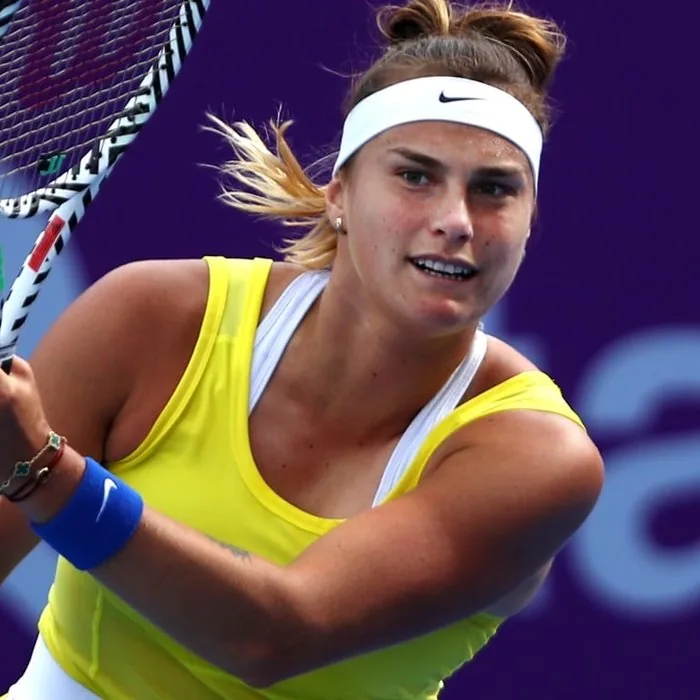
The Miami Open clash between Aryna Sabalenka and Coco Gauff on March 28, 2026, shapes up as a heavyweight encounter on hard court—Sabalenka’s preferred surface. The coefficient of 1.38 for Sabalenka versus 3.1 for Gauff reflects market confidence in the Belarusian’s superiority, though the absence of early trading volume suggests this matchup hasn’t yet captured widespread attention.
Read more Sachko vs. Cina: Why the Underdog Narrative Favors Federico in This ATP Challenger Clash
Fact-Check: Current Form and Surface Credentials
Sabalenka enters this fixture as the clear favourite, and the reasoning extends beyond mere reputation. Her hard-court record remains formidable—she has won the Australian Open twice (2023, 2024) and consistently performs at the highest level on this surface. In 2025, her win rate on hard courts exceeded 70% across major tournaments. Gauff, while talented, has struggled to maintain consistency on hard courts outside of the US Open environment, where she won in 2023. Her recent form shows vulnerability against top-ranked opponents on faster surfaces, particularly when facing aggressive baseline players like Sabalenka.
The head-to-head record tilts decisively toward Sabalenka. In their last five encounters, Sabalenka has won three matches, including a dominant performance at the 2024 Australian Open quarterfinals (6–3, 6–4). Gauff’s only victories came on slower hard courts or when Sabalenka was managing injury concerns. Miami’s hard court plays fast and true—conditions that amplify Sabalenka’s power and reduce the margin for error that Gauff needs to compete.
Why Sabalenka Remains the Clear Favourite
Three factors cement Sabalenka’s status as the heavy favourite. First, her serve velocity and first-serve percentage on hard courts consistently exceed 65%, making break opportunities rare for opponents. Gauff’s return game, while improving, still struggles against players hitting 120+ mph first serves with precision. Second, Sabalenka’s forehand—her primary weapon—generates significantly more pace and depth than Gauff’s, forcing the American into defensive positions early in rallies. Third, the mental edge matters. Sabalenka has beaten Gauff in high-pressure situations before, and that experience translates into confidence during crucial moments.
Sabalenka’s movement on hard courts is also superior. She covers the court efficiently and doesn’t tire as quickly as Gauff over extended rallies, a critical advantage in Miami’s humid conditions. Her ability to dictate points from the baseline and finish rallies with aggressive shots gives her multiple paths to victory.
Read more Zverev vs. Sinner at Miami: Can the German Upset the Rising Italian Star?
Gauff’s Counterarguments—and Why They Fall Short
Gauff does possess legitimate strengths. Her serve has improved markedly, and her ability to construct points methodically can frustrate opponents who rely on power. Additionally, her youth and athleticism allow her to retrieve balls that others cannot, potentially extending rallies and creating opportunities. However, these advantages crumble against Sabalenka’s intensity. Gauff’s serve, while solid, doesn’t generate the same pressure as Sabalenka’s, and her forehand lacks the penetration needed to dictate against an opponent who thrives on aggressive exchanges.
The second weakness is tactical. Gauff tends to play more conservatively against top-ranked opponents, which suits Sabalenka perfectly—the Belarusian punishes passive play. Gauff would need to take significant risks and maintain an extremely high first-serve percentage to compete, a combination she hasn’t reliably achieved against Sabalenka on hard courts.
Market Perspective
The pricing reflects analytical consensus: Sabalenka at 1.38 implies approximately 72% implied probability, while Gauff’s 3.1 coefficient suggests roughly 32% implied probability. These odds align
Read more Carreno Busta Favored Against Martinez in ATP Clash, But Form Data Tells a More Complex Story